
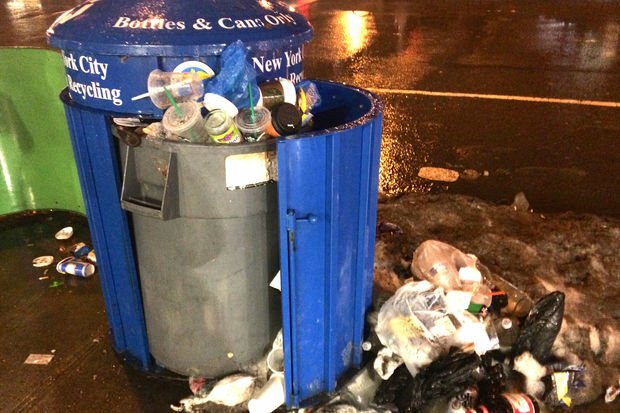
Better to bury it in landfills, just as we did 50 years ago.
Of all people, after decades of claiming otherwise, Greenpeace has finally fessed up not only is there no benefit from recycling plastics, it is actually harmful to the environment. This, as reported by the excellent John Tierney at City Journal.
Unfortunately, as Tierney writes, Greenpeace being Greenpeace their proposed solution is even worse than the failed recycling programs we’ve been putting with for so many years. “It proposes finally to ‘end the age of plastic’ by ‘phasing out single-use plastics’ through a ‘Global Plastics Treaty.’ This is a preposterous goal—imagine ‘phasing out’ disposable syringes . . .”
The best part of Tierney’s piece though is his rhetorically asking why environmentalists worldwide are so hell bent on making our lives miserable. His answer is novel but entirely believable.
The best explanation I’ve come up with is that plastic bans are a revival of the sumptuary laws formerly imposed on the lower classes by monarchs, nobles, and clergy. Those laws forbade commoners from owning certain kinds of clothes, jewelry, furnishings, and other products. The restrictions consistently failed to achieve their ostensible purpose of reducing “unnecessary” spending, but sumptuary laws endured until the Enlightenment because they reinforced ruling-class power and status. An English countess could display her superiority by wearing a dress with silver stripes that were illegal for women of lower rank. Spanish prelates and Portuguese monarchs proclaimed their moral virtue and political authority by forbidding the masses from owning clothes, curtains, and tablecloths made of silk.
California’s law forbidding hotels from offering disposable plastic toiletries is a gratuitous annoyance for travelers who’d like a little bottle of shampoo, but it enables the state’s politicians and environmental groups to exercise power and pretend to be saviors of the planet. The pretense is so ridiculous that even Greenpeace will eventually abandon it—but once again, that could take a few decades. The rest of us can start today.
Indeed we can and it can be done. Here in Taos the enviros pushed through a regulation requiring supermarkets to use paper bags instead of plastic. Wisely, however, it was given a six-month trial, at the end of which the vast majority of residents were so fed up with paper bags ripping and bottoming out, especially during rain storms, they clamored and got their plastic bags back. This user and undoubtedly many others actually recycle those plastic bags by using them as waste basket liners–just as we did before they were banned. That won’t satisfy Greenpeace of course, nothing will, but it works just fine for this writer.
 The Taos Tatler