
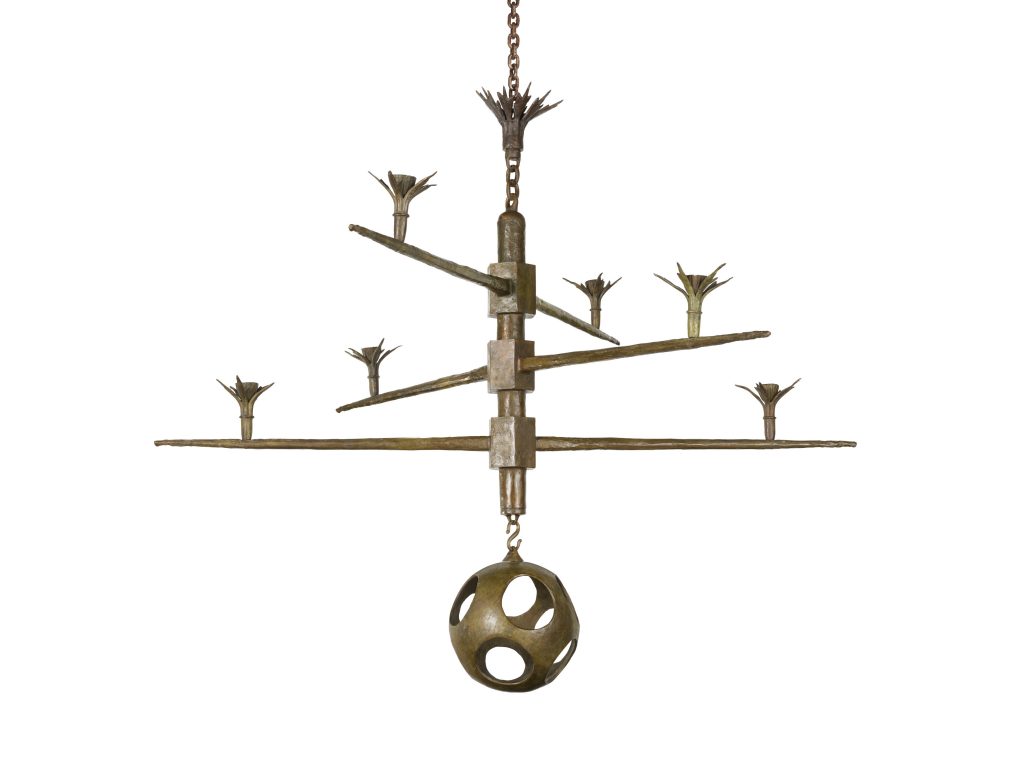
Alberto Giacometti, Chandelier for Peter Watson. Photo courtesy of Christie’s Images Ltd. 2023.
From artnet.com:
The U.K. is fighting to keep a unique bronze chandelier by Alberto Giacometti within its borders, issuing a temporary export ban to give a local institution a chance to match the £2.4 million ($2.9 million) purchase price on the work.
It’s a pretty penny—especially considering the lighting fixture was worth just $700 when British painter John Craxton discovered it in a London antique shop in the 1960s. The artist was immediately aware of the significance of his find, as he recognized the work as having belonged to his late friend Peter Watson, an art collector and important midcentury patron of the arts in the U.K.
$700 seems pricey enough for this light fixture, which to my unpracticed eye appears to be an assemblage of metal parts made into a chandelier after a bit of rummaging around a metal shop. Does the mere fact the artist Giacometti did the rummaging really make it worth a cool three-million? How so?
Can anyone explain what’s so special about a rather dull collection of nuts and bolts, albeit their being made of bronze, without lapsing into artspeak. No? I didn’t think so.

